
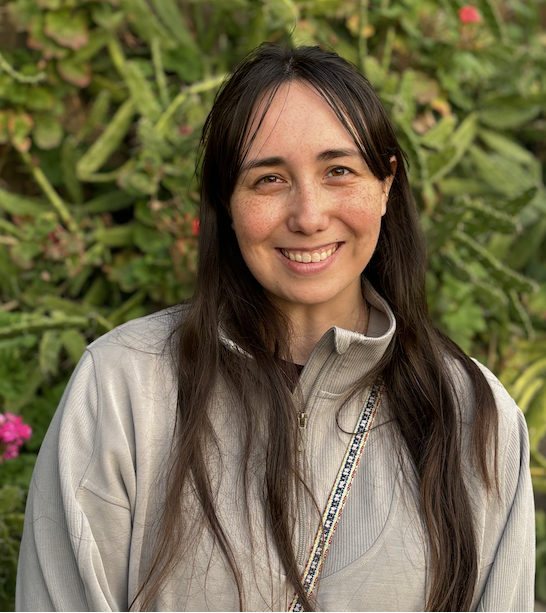
Jaiden (she/her) is a 2nd year PhD student in Psychological Science in the SPP lab. She is mixed European/White-Canadian and Anishinaabe, and a member of the Mississaugas of the Credit First Nation.
Jaiden graduated in 2021 with a BA (Hons.) in Psychology and a Minor in Neuroscience from the University of Guelph, and completed her MA in Psychological Science in the SPP lab in 2024.
Before entering graduate studies, Jaiden worked as a Research Assistant at Indspire, a national Indigenous charity organization, researching Indigenous educational attainment and outcomes in Canada.
Jaiden’s SSHRC-funded MA thesis investigated how non-Indigenous Canadians’ levels of allyship, post-colonial ideologies (historical negation and symbolic exclusion), and collective guilt impact their support for reconciliation, Indigenous collective action movements (i.e., Land Back, MMIWG2S, and Every Child Matters), and political tolerance.
Jaiden is also a member of and RA for the Decolonizing and Indigenizing Psychology Committee (DIPC) in the Department of Psychology, and helped develop a new undergraduate course at TMU called “Indigenous Peoples and Psychology” (offered beginning Winter 2026).
Broadly, Jaiden researches Indigenous-settler relations in Canada, political ideologies, intergroup emotions, collective action, and environmental psychology.
Jaiden is currently working on her dissertation, which aims to understand the nature of ideological moral credentialing (i.e., when individuals are high in historical negation but simultaneously low in symbolic exclusion) in Canada, for the purpose of mitigating the negative impacts of such belief patterns on reconciliation with Indigenous peoples.
Select publications:
- Shayegh, J., Choma, B. L., Cila, J., & Herkimer, J. (2025). Non-Indigenous Canadians’ attitudes toward renaming or removing statues as a reconciliation strategy. Journal of Applied Social Psychology. https://doi.org/10.1111/jasp.13088
- Herkimer, J., Choma, B. L. and Nasser, L. (2025). Non-Indigenous Canadians’ Post-Colonial Ideologies, Allyship and Collective Guilt Predict Support for Reconciliation, Collective Action and Political Tolerance. Journal of Community Applied Social Psychology, 35: e70043. https://doi.org/10.1002/casp.70043
- Jones, C. T., & Maloley, C. (Hosts). (2024, June). Decolonizing psychology with Dr. Becky Choma, Anik Obomsawin and Jaiden Herkimer (No. 29) [Audio podcast episode]. In Podagogies: A learning and teaching podcast. Centre for Excellence in Learning and Teaching, Toronto Metropolitan University. https://soundcloud.com/user-305224768-967971769/decolonizing-psychology-with-dr-becky-choma-anik-obomsawin-and-jaiden-herkimer
- Decolonizing and Indigenizing Psychology Committee. (2024, April). Conversations with knowledge holders and experts to inform the development of the “Indigenous Peoples and Psychology” course proposal. Toronto Metropolitan University. https://www.torontomu.ca/content/dam/psychology/edij/DIPC_FINAL_REPORT_April_2024.pdf
- Herkimer, J., & Summers, K. (2023). Story as knowledge: Experiences of early leaving and persistence from Indigenous post-secondary students. Indspire. https://indspire.ca/wp-content/uploads/2023/03/Story-as-Knowledge-Experiences-of-Early-Leaving-and-Persistence-from-Indigenous-Post-Secondary-Students-FINAL.pdf
- Simon, D., Burns, N., Hunter-Porter, N., Lanceleve, T., Préfontaine, N., Herkimer, J., Roan, S., Auger, J., Benoit, A., Morton Ninomiya, M., & Bourque Bearskin, L. (2023). Embodied in Indigenous research: How indigeneity, positionality, and relationality contribute to research approaches and understanding. Healthy Populations Journal, 3(1), 30-43. https://doi.org/10.15273/hpj.v3i1.11475