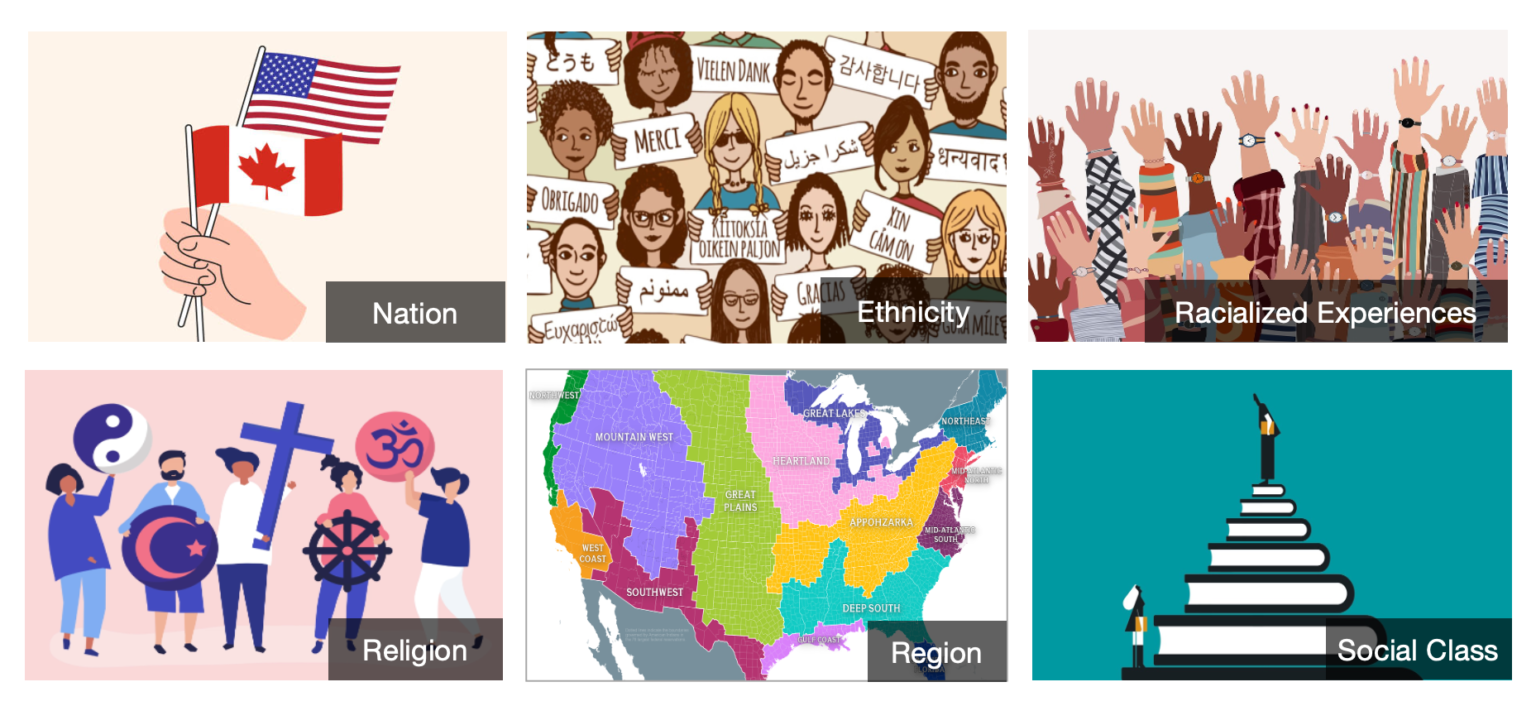
In the CODE Lab, we study psychological processes that underlie how culture and diversity shapes minds, and how minds think about culture and diversity. When we talk about culture, we refer to the many different forms of culture that have a historical, long standing influence on human societies, the beliefs and practices of which are socially transmitted. Although there are many different forms of culture, in the CODE Lab we tend to study forms of culture that are observed worldwide:
ongoing lines of research
The cultural shaping of the social brain.
I study cultural variation in social interactions, with a special focus two areas. First, I study how culture shapes visual attention processes that shape who we initially attend to (e.g., gaze cueing, mentalizing, people perception). Second, I study how variations in genes (and its interaction with culture) contribute to social interactions, such as prosocial behaviour. In particular, I focus on the influence of dopamine-signaling genes, as these genes are implicated in the acquisition of culture. I also engage in critical issues related to studying culture, cognition, and biology, such as how lay people tend to think of culture as related to biology and how cultural differences are often communicated about in an essentialist manner.
The culturally minoritized experience.
I have an interest in cultural clashes among culturally minoritized groups (e.g., racially, religiously, and ethnically) and its psychological consequences on social identity and well-being. I do this by studying the various pathways these groups experience worse (but sometimes better!) well-being. In this area of research, I have studied meta-stereotypes, cultural mismatch effects, and social identity as pathways to well-being.
Improving interculturalrelations through media.
In this new line of research, I focus on how media (e.g., TV, social media, movies, cartoons) can contribute to positive cultural change in viewers’ beliefs about culture, diversity, and inequality. I do this by trying to discover what features of racial and cultural representation in the media matter for important psychological consequences, such as racial bias, intercultural curiosity, and perceptions of inequality. With this work, I intend to both theoretically investigate the importance of representation in media and apply the findings to real-world contexts as interventions with practitioners.