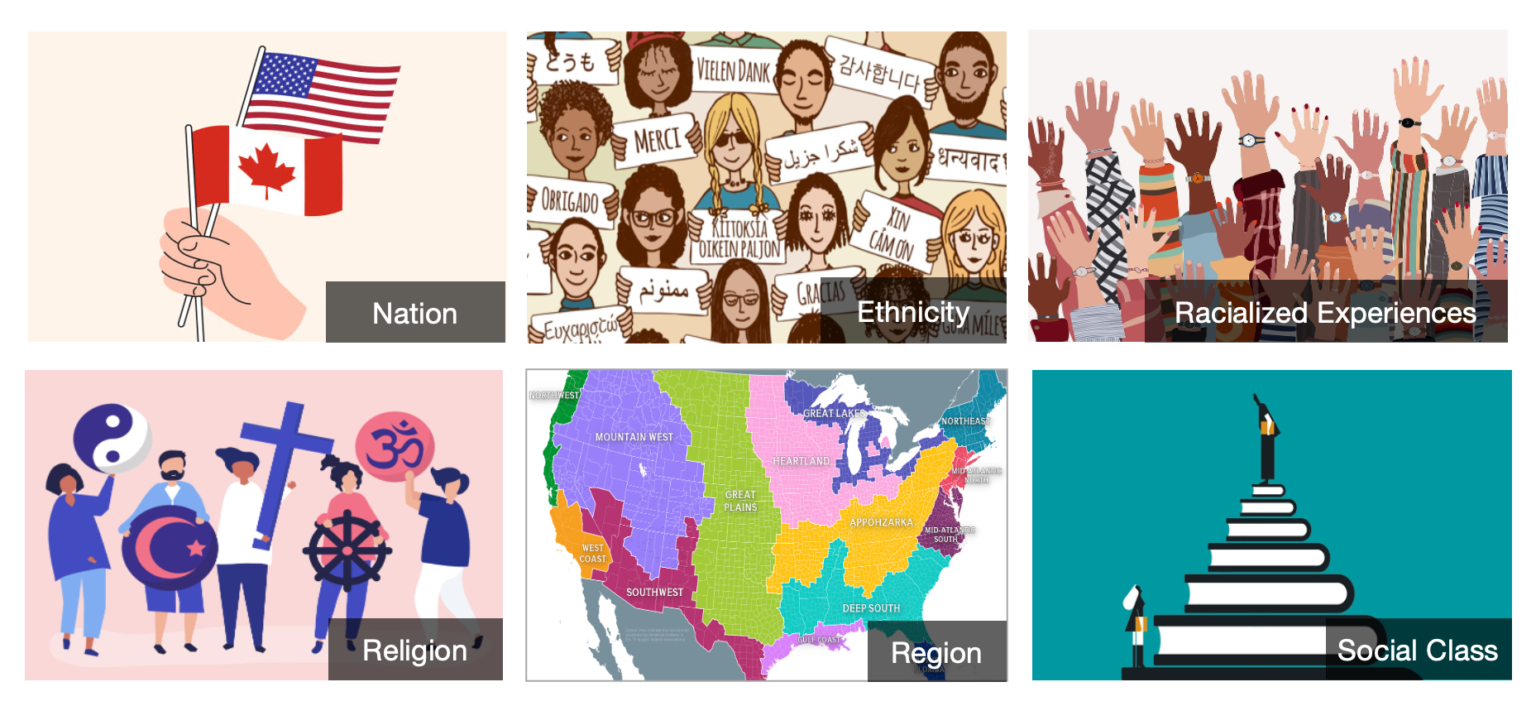
In the CODE Lab, we study psychological processes that underlie how culture and diversity shapes minds, and how minds think about culture and diversity. When we talk about culture, we refer to the many different forms of culture that have a historical, long standing influence on human societies, the beliefs and practices of which are socially transmitted. Although there are many different forms of culture, in the CODE Lab we tend to study forms of culture that are observed worldwide:
ongoing lines of research
Cultural shaping of cognitive and biological processes that support the social brain.
We study the cultural variation and modulation of cognitive (e.g., visual attention) and biological (e.g., genes) mechanisms and processes that support social interactions. We are also interested in why biology comes to mind when people think about critical issues related to culture, especially about ethnicity and race (e.g., cultural membership, cultural maintenance and continuity, cultural authenticity).
Cultural approaches to studying intergroup biases and contact.
We are broadly interested in studying the causes and consequences of intergroup biases with a special focus on highlighting cultural clashes (i.e., perceived or actual cultural differences) as an origin point for intergroup bias. In this area, we are also interested in how intercultural curiosity increases intergroup contact using media (e.g., TV) and social interaction methods.
The depiction of culture and race in media and its psychological consequences.
In this emerging line of work, we focus on how media (e.g., TV, social media, movies, cartoons) can contribute to positive cultural change in viewers’ beliefs about culture, diversity, and inequality. For example, we study what features of racial and cultural representation in the media matter for important psychological consequences, such as racial bias, intercultural curiosity, and perceptions of inequality.